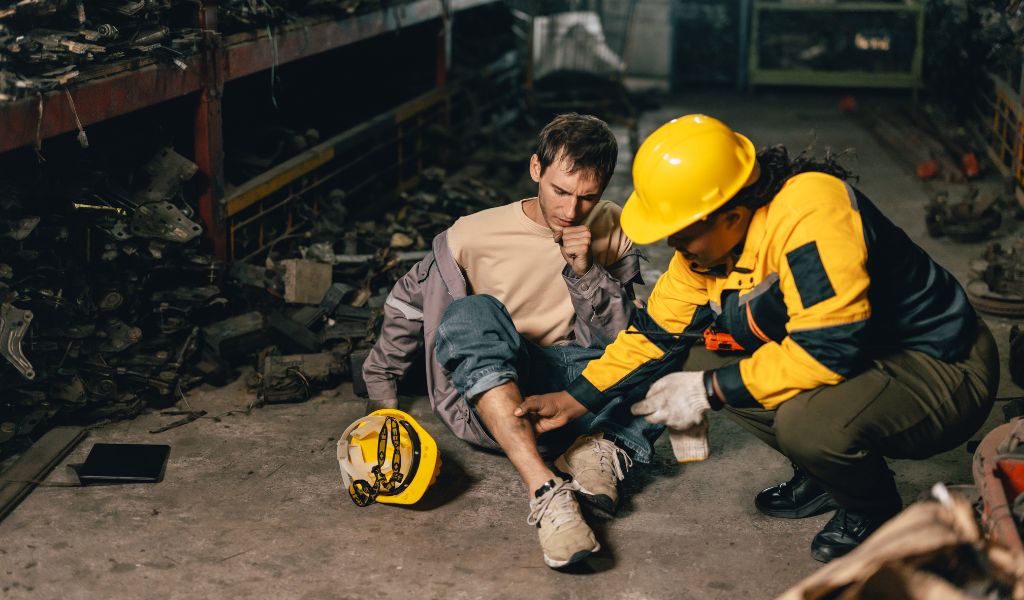
We don’t get the deep snow other regions do, but Renton gets exactly the kind of winter weather that causes trouble — freezing overnight temps, wet pavement that ices over, and driveways and parking lots that never get properly treated. I see a predictable bump in patients every February who slipped on a icy step, a frosted-over deck, or a parking lot at work and either caught themselves awkwardly or went down hard. Some come in the same week. Others come in three weeks later once they realize the ache never actually went away.
Why Falls Are Rough on the Spine Even When They “Weren’t That Bad”
There are really two mechanisms at play in a slip-and-fall. The first is the direct impact — landing on your tailbone, hip, or back on a hard surface transmits significant force straight into the spine. The second, and the one people underestimate, is the catch. When you slip and your body instinctively twists, grabs a railing, or overcorrects to avoid falling, that sudden asymmetric muscle contraction and joint torque can strain the low back or neck just as much as the fall itself would have — sometimes more, because the impact never actually happened to signal “something’s wrong” the way a hard landing does.
That’s why a fall that felt more embarrassing than painful in the moment can leave you stiff and sore two days later. Inflammation takes time to build, and adrenaline in the moment of the fall genuinely masks pain you’ll feel once it wears off.
Common Injury Patterns After a Winter Slip
- Low back strain from catching yourself or landing on the tailbone — often shows up as stiffness that’s worse in the morning and better with gentle movement
- Whiplash-type neck injury if your head snapped forward or back during the fall, even without hitting anything — we cover the delayed-onset pattern on our whiplash page
- Sciatic irritation if the fall aggravated a disc or put pressure on the sciatic nerve — watch for pain running down the back of the leg, not just in the low back
- Shoulder or wrist strain from bracing yourself on the way down
- Hip and pelvis bruising that can throw off gait and secondarily stress the low back over the following days
What to Do in the First 24-48 Hours
If you didn’t hit your head, lose consciousness, or have obvious signs of a fracture (severe localized pain, visible deformity, inability to bear weight), the standard advice is relative rest, ice for the first day or two to control swelling, and gentle movement as tolerated rather than complete immobilization — prolonged bed rest generally slows recovery from soft tissue injuries. But “gentle movement as tolerated” isn’t the same as “ignore it.” If pain is building rather than easing over the first few days, that’s worth getting checked.
When to Get Evaluated
Come in for an evaluation if, after a fall, you have:
- Pain that’s still present or getting worse three or more days later
- Any numbness, tingling, or weakness in an arm or leg
- Pain that radiates down a leg past the knee, which can point to disc involvement — see our sciatica page
- Reduced range of motion in your neck or back that isn’t improving
- A headache that started after the fall, especially if you hit your head at any point
What the Exam Involves
I take a detailed history of exactly how the fall happened — what you landed on, whether you caught yourself, whether your head was involved — because the mechanism tells me where to look first. Then I check range of motion, palpate the spine for tenderness or misalignment, and run orthopedic and neurological tests to check for nerve involvement. If there’s any concern about a fracture based on the mechanism or exam findings, we refer for imaging before proceeding with any hands-on care — safety comes first.
Once serious injury is ruled out, treatment typically involves gentle chiropractic adjustments to restore normal joint motion, along with soft tissue work and a graded return-to-movement plan. If the fall happened at work, this may also fall under an L&I claim — we can walk you through that process. Falls involving a vehicle, like slipping on ice in a parking lot that led to a car accident, fall under our broader personal injury care services.
When to Go to the ER Instead
Skip the chiropractic visit and go straight to the ER if you hit your head and have any loss of consciousness, confusion, repeated vomiting, or worsening headache; if you have severe, focal spine pain with numbness or weakness in both legs; if you lose bladder or bowel control; or if there’s an obvious deformity or you can’t bear weight at all. Those need imaging and emergency evaluation first.
Frequently Asked Questions
I fell a few weeks ago and I’m still sore — is it too late to get checked?
No. Delayed symptoms are common, and it’s still worth an evaluation even weeks later, especially if pain hasn’t improved on its own.
Will insurance cover treatment after a fall?
It depends on where the fall happened and the circumstances — a fall at work is different from a fall on your own property or someone else’s. We can help you understand the options once we know the details.
Do I need an X-ray before I see a chiropractor?
Not always — it depends on the mechanism of injury and what the exam shows. If there’s any red flag for fracture, we’ll refer for imaging before proceeding.
Don’t Wait Out a Fall Injury
A slip that “wasn’t that bad” can still leave lasting stiffness or nerve irritation if it’s not addressed. New patients start with a $59 New Patient Special, including a full consultation and exam. Call (425) 276-8044 or schedule a visit online. Related reading: what to do after a car accident in Renton if your fall was vehicle-related, and how long does chiropractic take to fix sciatica if leg pain followed your fall.
References
- Centers for Disease Control and Prevention, Older Adult Falls Data
- National Institute of Neurological Disorders and Stroke, Back Pain Fact Sheet
Get Started Today
Start with a complimentary consultation to ask questions and confirm fit.