I’ve had patients walk in asking for spinal decompression by name, having read about it online, convinced it’s the answer to whatever’s going on with their back. Sometimes it is exactly the right tool. Sometimes their actual problem is something decompression won’t touch, and using it anyway would just waste their time and money. This article is about the difference.
What Spinal Decompression Actually Does
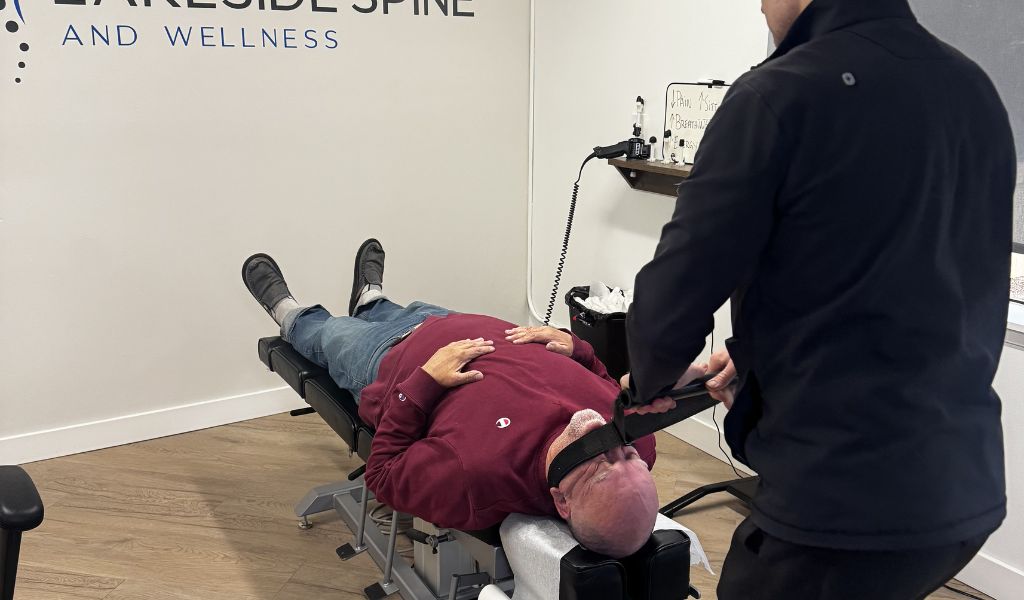
Spinal decompression uses a controlled, gentle traction force applied to the spine to create negative pressure within a disc. That negative pressure can help retract bulging or herniated disc material away from a nerve root, improve nutrient and fluid exchange into the disc, and reduce the compressive load on an irritated nerve. It’s done on a specialized table, with the force and angle adjusted specifically to the segment and condition being treated — nothing like the general stretching or manual traction people picture.
Who Tends to Respond Well
Based on what decompression is mechanically designed to do, the people who benefit most tend to have:
- A confirmed or strongly suspected disc issue. Bulging discs or herniated discs that are contributing to nerve compression are the classic decompression candidates, because the treatment directly addresses the mechanism causing the symptoms — see our herniated vs. bulging disc breakdown for how we tell the two apart.
- Radiating leg or arm pain from nerve compression. True sciatica from a lumbar disc, or arm symptoms from a cervical disc, often responds well when decompression reduces the pressure driving the nerve irritation — though it’s worth ruling out piriformis syndrome first, since decompression won’t help if the muscle, not the disc, is the driver.
- Degenerative disc changes with associated nerve symptoms. Degenerative disc disease that’s narrowing disc space and irritating a nerve root can respond to the improved disc height and reduced pressure decompression provides.
- Chronic low back pain that hasn’t responded to general manual care alone. If adjustments and soft tissue work have made partial progress but plateaued, and the exam points toward a disc component, adding decompression is often the piece that gets things moving again.
Who Decompression Is Not the Right Tool For
This matters just as much, and it’s the part that gets skipped when a treatment gets marketed as a cure-all:
- Pure muscular strain without disc involvement. If your pain is coming from a muscle or ligament strain with no disc component, decompression isn’t targeting the actual problem — soft tissue work and progressive loading are.
- Certain spinal fractures, tumors, or infections. These require different management entirely, and decompression is contraindicated.
- Advanced osteoporosis. The traction forces involved need bone that can tolerate them safely.
- Recent spinal surgery with hardware, in most cases. This depends heavily on the specific procedure and timeline, and needs direct coordination with your surgeon.
- Pregnancy. Decompression isn’t performed during pregnancy; if you’re pregnant and dealing with back pain, our prenatal chiropractic approach is the appropriate path instead.
- Certain severe spinal instability. Some conditions that involve excessive movement between vertebrae need stabilization-focused care rather than traction.
If your exam and history put you in one of these categories, I’ll tell you directly that decompression isn’t the move, and we’ll build a plan around what actually will help.
How We Decide
The decision isn’t made off a single symptom or because a patient requests it by name. It comes from:
- History. How the pain started, what makes it better or worse, whether there’s a clear disc-type pattern (worse with sitting or bending forward, radiating in a specific nerve distribution).
- Orthopedic and neurological testing. Specific tests that help distinguish disc-driven nerve irritation from other sources of back or leg pain.
- Imaging review, when available or warranted. If you already have MRI or X-ray results, we’ll review them. If not and the picture is unclear, we’ll discuss whether imaging makes sense before starting.
- Response to an initial trial. Even in good candidates, we track how you respond over the first several sessions, because decompression that isn’t producing meaningful change after a reasonable trial period tells us something too.
What a Phase of Care Actually Looks Like
For a genuine disc-related case, a typical initial course runs several weeks, with sessions a few times a week, gradually adjusted based on how you’re responding. It’s usually combined with adjustments to the surrounding joints, targeted exercise to support the changes decompression is making, and guidance on positions and movements to avoid while the disc is healing. It is not a single session that fixes things, and anyone promising that isn’t describing how the physiology actually works.
Red Flags — When to Skip Conservative Care and Get Seen Urgently
- Loss of bladder or bowel control
- Numbness in the groin or inner thighs
- Progressive leg weakness that’s worsening day to day
- Severe back pain following major trauma
These need same-day medical evaluation, not decompression as a first step.
Frequently Asked Questions
How is spinal decompression different from a regular chiropractic adjustment?
An adjustment restores normal motion and alignment to a joint through a quick, targeted force. Decompression applies a slow, controlled traction force over a longer period specifically to reduce pressure within a disc. They work through different mechanisms and are frequently used together rather than as substitutes for each other.
How many sessions before I’d notice a difference?
Most people who are good candidates start noticing some change within the first two to three weeks of consistent sessions, though a full course typically runs longer than that. If there’s been no meaningful change by that point, we reassess whether decompression is still the right approach.
Is spinal decompression covered by insurance?
Coverage varies a lot by plan and by whether it’s classified as part of a broader treatment plan. We can go over your specific situation at your visit — it’s worth asking directly rather than assuming either way.
Find Out If You’re a Candidate
If you’ve been dealing with back or leg pain that fits a disc-type pattern, the only way to know if decompression is right for you is a real exam, not a guess based on what you read online. Our New Patient Special is $59 and includes that full evaluation. Call (425) 276-8044 or book online to get a straight answer.
References
- National Institute of Neurological Disorders and Stroke — Low Back Pain
- American Academy of Orthopaedic Surgeons — Herniated Disc
Get Started Today
Start with a complimentary consultation to ask questions and confirm fit.