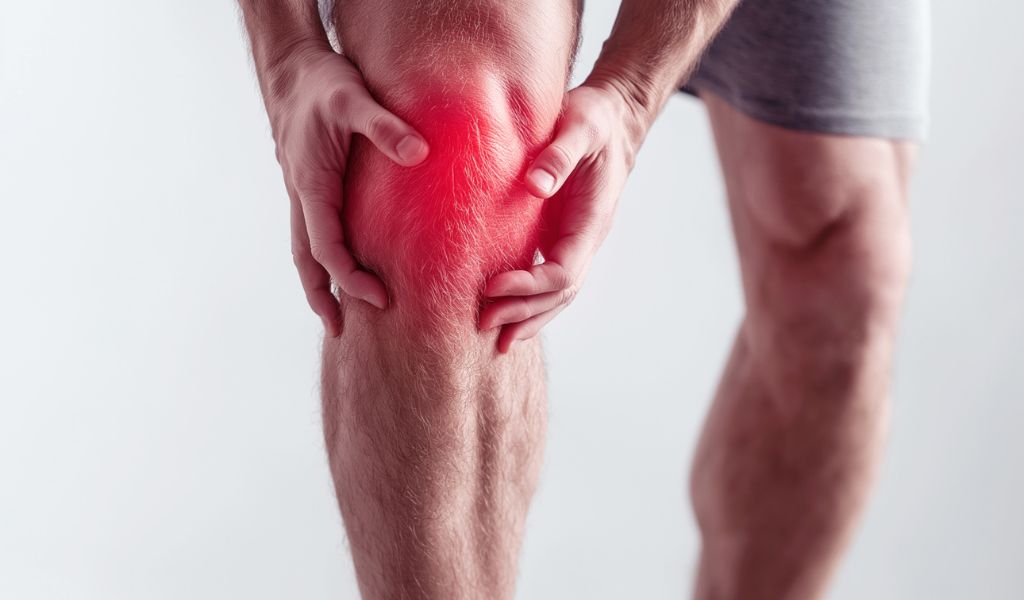
Runners come in pointing at their knee, convinced that’s where the problem lives. Sometimes it is. But a huge share of what gets labeled “runner’s knee” actually originates higher up, in the hip, and treating the knee alone leaves the real problem untouched — which is why the pain keeps coming back after a few weeks off.
What “runner’s knee” usually means
Runner’s knee is a catch-all term, but it most often refers to patellofemoral pain syndrome — pain around or behind the kneecap that worsens with running, squatting, or going downstairs. It’s one of the most common overuse injuries in runners, and it’s rarely caused by a single traumatic event. It builds gradually from repetitive mechanical stress.
Why the hip is so often the real driver
The kneecap tracks in a groove on the thigh bone, and that tracking depends heavily on how the femur is positioned during movement — which is controlled largely by the hip muscles, not the knee itself.
Hip abductor weakness
The gluteus medius, a muscle on the side of the hip, is responsible for keeping your pelvis level and your thigh from collapsing inward when you land on one leg — which is exactly what happens with every single running stride. When this muscle is weak, the thigh rotates inward, pulling the kneecap out of its normal tracking path with every step. Over thousands of strides in a single run, that adds up to real irritation.
Hip flexor tightness
Chronically tight hip flexors, common in anyone who sits most of the day, can alter pelvic tilt and stride mechanics, adding compensatory stress through the knee.
Pelvic and low back alignment
Asymmetries or restrictions in the pelvis and low back can change how load transfers down through the hip and into the knee with every stride. This is one of the reasons runners with hip pain often develop knee symptoms on the same side, or vice versa.
How we evaluate a runner’s knee case
We don’t just look at the knee. A thorough evaluation includes:
- Single-leg stance and step-down testing to watch how the hip and pelvis control the leg under load — this is often where the mechanical fault becomes obvious.
- Hip strength testing, specifically the gluteus medius and other hip stabilizers.
- Spinal and pelvic alignment check, since restrictions here can alter how forces move through the entire kinetic chain.
- Running-specific history — mileage changes, footwear, terrain, and training surface all matter, since sudden increases in volume are a classic trigger.
What actually fixes it
Rest alone almost never fixes recurring runner’s knee, because it doesn’t address the mechanical fault — symptoms just come right back when training resumes. Effective care usually combines:
- Chiropractic adjustments to restore normal motion in the hip and pelvis where restrictions are altering your gait mechanics.
- Targeted hip strengthening, especially the gluteus medius, through rehab exercise therapy — single-leg work is particularly effective since it mimics the actual demand of running.
- Gait and training load review, because a lot of runner’s knee cases trace back to a sudden jump in mileage, a new pair of shoes, or a change in terrain.
A simple self-check
Stand on one leg in front of a mirror. Watch your hip on the standing side — does it drop, or does your knee cave inward toward your other leg? That’s a visible sign of the same hip weakness pattern we look for in the clinic. It doesn’t replace a proper evaluation, but it’s a useful first clue if you’re dealing with recurring knee pain and wondering whether this applies to you.
When to actually stop running and get evaluated
Push-through-it culture in the running community causes more chronic injuries than it prevents. Get evaluated rather than pushing through if you notice:
- Pain that starts earlier in each run as weeks go on
- Pain that persists for hours or days after running, not just during
- Swelling around the kneecap
- Any sense of instability or the knee “giving way”
Continuing to run through worsening symptoms tends to extend recovery time significantly compared to addressing it early.
Frequently Asked Questions
Is runner’s knee the same as a meniscus tear?
No. Runner’s knee (patellofemoral pain) is a mechanical tracking and overuse issue involving the kneecap, while a meniscus tear is damage to the cartilage inside the joint, often from a twisting injury. A proper exam distinguishes between them.
Can I keep running while I fix this?
Often yes, with modified volume and specific corrective exercise, but it depends on severity. We build a plan around what your body can currently tolerate rather than a blanket “stop running” or “keep running” answer.
Do orthotics fix runner’s knee?
Orthotics can help in some cases, particularly with certain foot mechanics, but they don’t address hip weakness, which is the more common root cause. We look at the whole kinetic chain rather than assuming the fix is under your foot.
Get Back to Pain-Free Miles
If knee pain keeps derailing your training, the fix might start at your hip, not your knee. New patients start with our $59 New Patient Special, which includes a full consultation and exam. Book online or call us at (425) 276-8044. If your knee pain shows up on the trail more than the road, our post on hiking the Cascades without wrecking your knees covers a lot of the same hip mechanics. If you’re training around Renton, our post on what to do after a fall or injury covers related biomechanics. We also see patients from Newcastle; visit our contact page for directions and hours.
References
- AAOS: Patellofemoral Pain Syndrome (Runner’s Knee)
- NIH MedlinePlus: Knee Injuries
Get Started Today
Start with a complimentary consultation to ask questions and confirm fit.