This is one of the most common questions I get from patients in their second trimester, usually after low back pain or hip pain has gotten bad enough that they’re finally asking. The short answer is yes, chiropractic care is widely considered safe during pregnancy when performed by someone trained in prenatal techniques — but the “how” matters as much as the “if.”
Why pregnancy causes so much musculoskeletal pain
Pregnancy changes your body’s mechanics in ways that predictably load the spine and pelvis:
- Weight distribution shifts forward, pulling the low back into more curvature and increasing stress on the lumbar spine.
- The hormone relaxin loosens ligaments throughout the pelvis and spine to prepare for delivery, which also means joints are less stable and more prone to irritation.
- Posture compensations develop as the center of gravity moves, often creating tension through the mid-back, shoulders, and neck.
- The growing uterus can affect pelvic alignment, sometimes contributing to sciatic-type nerve irritation as pressure shifts.
This is why low back pain, hip pain, and even sciatica-like symptoms are so common in the second and third trimesters — it’s not just “part of pregnancy to push through,” it’s a mechanical problem we can actually address.
How prenatal adjustments are different
Our prenatal chiropractic approach modifies technique and positioning specifically for pregnancy, not just applying the same approach we’d use on any other patient:
Positioning
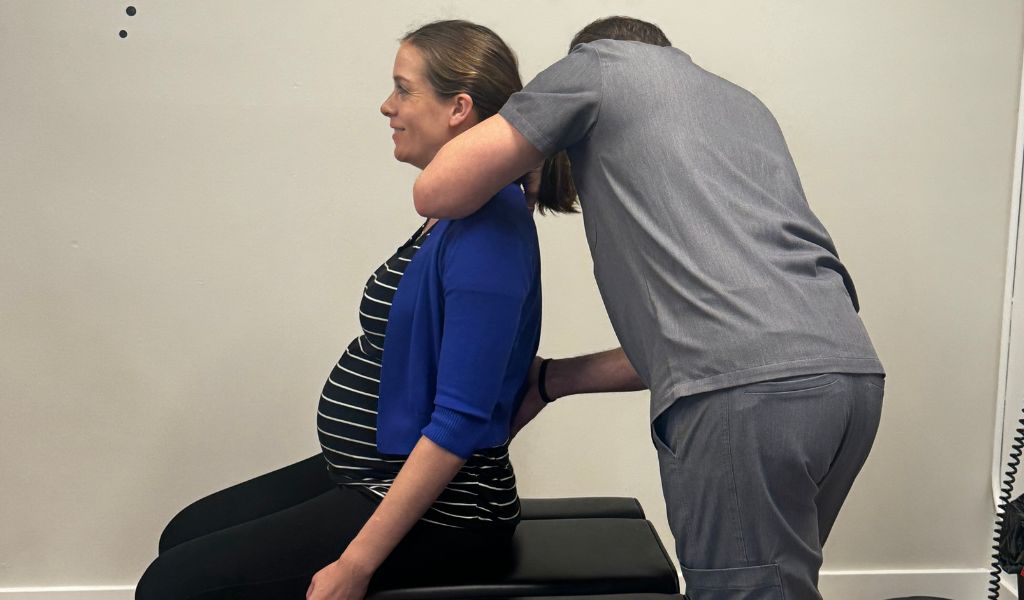
We use pregnancy-specific tables and positioning — including side-lying and supported forward-leaning positions — so there’s never pressure directly on the abdomen. Standard face-down positioning simply isn’t used once a bump is present.
Technique adjustments
Lower-force techniques are typically used, especially as pregnancy progresses and ligament laxity increases. The goal is restoring joint motion and reducing nerve irritation, not aggressive manipulation.
The Webster Technique
Many prenatal chiropractors, including our approach here, use a specific analysis and adjustment protocol aimed at reducing sacral and pelvic torsion and the resulting tension on the ligaments supporting the uterus. It’s commonly discussed in the context of pelvic balance in the third trimester, though it’s not a guaranteed method for fetal positioning — we present it honestly as a way to support pelvic function, not as a promise.
What we check before starting care
A prenatal intake is thorough, because pregnancy adds variables a standard exam doesn’t have:
- Due date and trimester, since technique and positioning change as pregnancy progresses.
- Any pregnancy complications your OB has flagged — we coordinate with your prenatal care team, not work around them.
- Specific symptom pattern — low back, hip, sacroiliac joint, sciatic-type pain, or rib and mid-back tension all get evaluated and treated somewhat differently.
- Overall posture and pelvic alignment, which tells us where the mechanical stress is actually concentrated.
When we’d hold off or refer out
Safety comes first. We’ll coordinate directly with your OB or midwife, and in some cases hold off on adjustments, if there’s a history of placenta previa, preeclampsia, or other complications your provider has flagged as high-risk. This is a collaborative relationship with your prenatal care team, not a substitute for it. According to ACOG, musculoskeletal back pain is extremely common in pregnancy and conservative, non-drug approaches are generally the first-line recommendation — which is exactly the role chiropractic care plays alongside your OB care.
What patients typically notice
Common improvements patients report during a course of prenatal care include:
- Reduced low back and hip pain, especially with standing or walking
- Less sciatic-type pain radiating into the leg or buttock
- Better sleep due to reduced discomfort when changing positions
- Improved pelvic balance and comfort in later trimesters
Every pregnancy is different, and we don’t promise a specific outcome — we treat what the exam shows and adjust the plan as your body changes week to week.
Frequently Asked Questions
When is it safe to start prenatal chiropractic care?
There’s no set week — many patients start in the first trimester for nausea-related tension or early back discomfort, others start later once low back or hip pain develops. It’s safe throughout pregnancy with appropriate technique.
Will adjustments hurt the baby?
No. Techniques used in prenatal care avoid pressure on the abdomen entirely and use controlled, low-force methods specifically because of pregnancy’s increased joint laxity.
Can chiropractic care help after delivery too?
Yes — postpartum recovery involves its own set of mechanical changes as ligaments tighten back up and posture readjusts, especially with the physical demands of caring for a newborn. Many patients continue care into the postpartum period; if you’re not sure whether ongoing discomfort is worth addressing, our 5 signs you need to see a chiropractor post is a good starting point.
Get Comfortable Through Every Trimester
If pregnancy-related back or hip pain is wearing you down, you don’t have to just wait it out. New patients start with our $59 New Patient Special, including a full consultation and exam tailored to your stage of pregnancy. Book your appointment or call us at (425) 276-8044. You may also want to read about chiropractic vs. physical therapy if you’re weighing your options for pregnancy-related pain.
References
- ACOG: Back Pain During Pregnancy
- NIH MedlinePlus: Pregnancy and Back Pain
Get Started Today
Start with a complimentary consultation to ask questions and confirm fit.