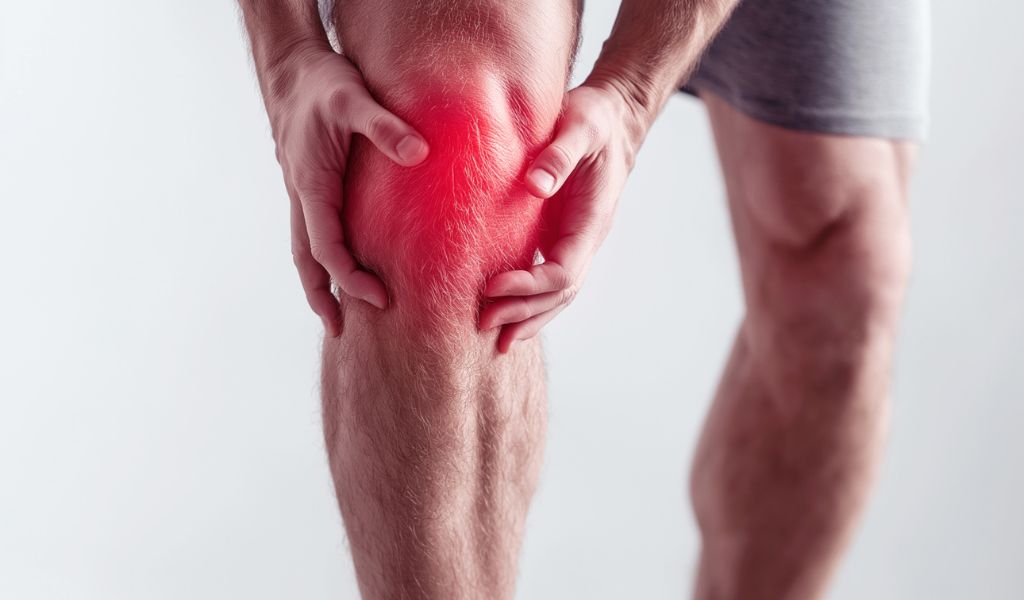
Summer in the Puget Sound means trailheads fill up fast, and by August my schedule fills up with the same complaint: knee pain that shows up on the way down, not the way up. If you’ve hiked Mailbox Peak, Mount Si, or anything in the Alpine Lakes Wilderness and spent the next three days limping around the house, this one’s for you.
Why It’s the Descent, Not the Climb
Going uphill, your quads work concentrically — shortening as they contract, powering you up each step. Coming down, those same muscles work eccentrically — lengthening under load, acting as brakes with every footfall. Eccentric loading generates far more force through the knee joint than concentric loading does, which is exactly why a hike that felt fine on the way up can leave your knees aching for days after the descent.
Add in Cascade-specific terrain — loose scree, root systems, sudden elevation drops on trails like the Mailbox Peak boulder field — and the knee is absorbing repeated, unpredictable impact for miles at a stretch. That’s a different demand than a flat trail or a treadmill, and most people’s training doesn’t match it.
What’s Actually Going On When It Hurts
A few patterns show up consistently in hikers:
Patellofemoral pain. An ache around or behind the kneecap, worse going downhill or downstairs. Usually related to how the kneecap tracks in its groove, which is heavily influenced by hip and glute strength, not just the knee itself.
IT band irritation. Sharp pain on the outside of the knee, often appearing at a predictable mileage point on longer hikes. Related to hip stability more than the IT band itself being “tight.”
Meniscus irritation. A deeper ache or catching sensation, sometimes with swelling, more likely after a twisting step on uneven ground.
Referred pain from the hip or low back. Less obvious, but real — irritation higher up the chain can present as knee discomfort, especially in hikers who already carry some hip pain or lower back pain.
What Actually Helps
Trekking poles, used correctly. Poles redistribute load away from the knees on descents — studies have shown meaningful reduction in compressive knee force with proper pole use. The key word is “correctly”: poles planted well ahead of your foot on descents, not just carried.
Hip and glute strength, not just knee strength. The muscles that control how your knee tracks are largely at the hip. Glute medius weakness in particular shows up repeatedly in hikers with recurring knee pain. Step-downs, lateral band walks, and single-leg work targeting the hip do more for hiking knees than knee extensions alone.
Downhill pacing. Shorter, controlled steps on steep descents reduce peak impact force compared to letting momentum carry you down. It’s slower. It’s also why your knees feel better the next day.
Footwear and terrain matching. A shoe with adequate cushioning and a stable platform matters more on PNW trails, where roots and loose rock create constant small adjustments the foot and knee have to absorb.
Addressing mechanics before the season, not after. If your knee, hip, or ankle mechanics are already slightly off — from an old ankle sprain, uneven leg length function, or restricted joint motion somewhere in the chain — that shows up under the repetitive load of a long descent far more than it does in daily walking. A knee pain evaluation before hiking season catches this while it’s cheap to fix.
At Lakeside Spine and Wellness, I look at the whole kinetic chain when someone comes in with hiking-related knee pain — ankle, knee, hip, and low back together — because knee pain on the trail is rarely only a knee problem. We combine adjustment with targeted rehab exercise therapy to build the hip and glute strength that actually holds up on a 12-mile day.
Red Flags: When to Stop and Get It Checked
Most hiking knee pain is manageable with the adjustments above. Get it evaluated sooner if you notice:
- Significant swelling that develops within hours of a hike
- A locking or catching sensation that prevents full extension
- Instability — the knee feels like it might give way
- Pain that doesn’t improve at all with a few days of rest and worsens with every subsequent hike
Frequently Asked Questions
Should I hike through knee pain or stop immediately?
Mild, dull soreness that improves with rest between hikes is common and usually not a sign of damage. Sharp pain, swelling, or instability is a signal to stop and get evaluated before your next trip, not push through it.
Do knee braces actually help on the trail?
They can provide useful proprioceptive feedback and mild support for some people, but a brace doesn’t fix the underlying hip or ankle mechanics driving the pain. It’s a reasonable short-term tool alongside, not instead of, addressing the actual cause.
How far in advance of hiking season should I address knee issues?
Ideally 6 to 8 weeks, which gives enough time to build hip and glute strength and correct joint mechanics before you’re putting them under real trail load. Starting the week before your first big hike is better than nothing, but won’t get you the same protection.
Get Ahead of It This Season
If your knees have been complaining after every hike, don’t wait until they’re limiting which trails you can do. Call (425) 276-8044 or book an appointment — new patients start with our $59 New Patient Special, which includes a full mechanical evaluation of the hip-knee-ankle chain. For runners dealing with a similar pattern, see How Long Does It Take a Chiropractor to Fix Sciatica?, and for general activity readiness, 5 Signs You Need to See a Chiropractor. We also see hikers from Maple Valley heading out to the same eastside trailheads.
References
- American Academy of Orthopaedic Surgeons — Patellofemoral Pain Syndrome
- Mayo Clinic — Knee Pain
Get Started Today
Start with a complimentary consultation to ask questions and confirm fit.