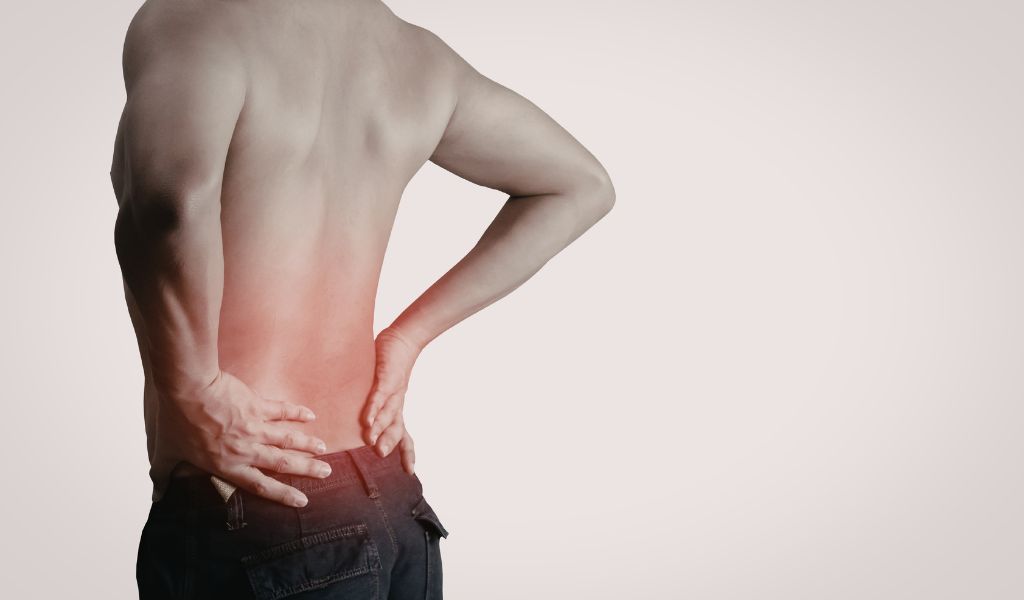
Pickleball courts around Renton have gotten busy, and I’ve noticed the injury pattern that comes with it — a specific kind of low back pain that shows up a day or two after a session, right alongside the golf-related back pain I’ve treated for years. Different sport, same underlying mechanism: fast, loaded rotation through a spine that wasn’t quite ready for it.
Why Rotational Sports Are Hard on the Back
Your lumbar spine isn’t built for a lot of rotation. It’s designed mainly for flexion, extension, and some side bending — most of your rotation actually happens up in the thoracic spine and through the hips. When those areas are stiff, which is extremely common in adults who spend their weekdays sitting, the low back ends up compensating by rotating more than it’s designed to.
A golf swing asks for a fast, forceful rotation through the trunk, repeated dozens of times a round, often generated with more speed than control if your hip and thoracic mobility hasn’t kept pace with your enthusiasm for the game. Pickleball asks for something similar but faster and less predictable — quick pivots, sudden direction changes, and reaching shots that combine rotation with reaching or lunging, all with much less warmup than most people give it credit for needing.
When the low back is forced to handle rotation that should be coming from the hips and thoracic spine, the joints and discs there take a load they’re not well suited for, which is the same overload pattern behind a lot of the lower back pain we see in the clinic. Over time, or after one bad swing or one lunge for a shot, that shows up as pain — sometimes centered in the low back, sometimes radiating if a disc or nerve gets irritated in the process. If that radiating pattern sounds familiar, it’s worth reading how that connects to sciatica versus other leg pain causes.
What This Actually Looks Like in the Exam Room
Patients usually describe one of two patterns:
- Sudden onset — a sharp pain during or right after a specific swing or shot, often with the immediate sense that “something happened” in that moment.
- Delayed onset — soreness or stiffness that builds over the following 24 to 48 hours, frequently mistaken for normal muscle soreness until it doesn’t resolve the way normal soreness does.
On exam, I’m checking rotational mobility through the hips and thoracic spine specifically, because restriction there is so often part of why the low back got overloaded in the first place. I’m also checking for the classic signs of disc involvement — pain with forward bending, any radiating symptoms into the leg, and specific segments in the low back that are restricted or provoke pain on palpation.
Treatment
For an acute rotational back injury, the early phase is about calming things down: adjustments to restore normal motion to the affected segments, soft tissue work for the muscles that are guarding around the injury, and guidance on which movements to avoid while things settle. Chiropractic adjustments here are aimed specifically at the segments that took the brunt of the rotational load.
The phase after that is where a lot of clinics stop too early, and it’s the phase that actually prevents this from happening again: rebuilding rotational mobility through the hips and thoracic spine so the low back stops being asked to compensate. That’s targeted rehab exercise therapy — specific mobility and stability work, not generic stretching.
Prevention — What Actually Reduces Your Risk
If you’re playing golf or pickleball regularly, a few things make a real difference:
Good lifting mechanics matter here too — the same hip-hinge fundamentals we cover in our post on spring yard work and lifting apply just as much to loading a golf bag or lunging for a pickleball shot.
- Warm up with rotation specifically, not just a light jog or static stretching. Trunk rotations, hip openers, and thoracic mobility drills prepare the tissue for what you’re about to ask it to do.
- Build hip and thoracic mobility as an ongoing habit, not just before you play. If those areas are consistently stiff from desk work, that stiffness is there every time you step on the court or the tee box, not just on game day.
- Don’t skip a proper progression back after time off. Jumping straight back into full-speed swings or aggressive pickleball after weeks away is one of the more common setups for injury I see.
- Pay attention to core stability, not just core strength. The ability to control rotation, not just generate it, is what protects the low back during a fast pivot or swing.
When to Get It Checked Instead of Waiting It Out
Most rotational strains improve with a few days of relative rest and respond well to care. Get evaluated sooner rather than later if you notice:
- Pain radiating down the leg, especially past the knee
- Numbness or tingling in the leg or foot
- Pain that’s getting worse rather than better after 3 to 4 days
- Any weakness in the leg
Those point toward possible nerve or disc involvement that benefits from being addressed directly rather than waiting to see if it resolves on its own.
Frequently Asked Questions
How soon after a back injury from golf or pickleball should I see someone?
Sooner is generally better, especially if there’s any radiating pain or if the pain is sharp rather than a dull ache. Waiting weeks on something that could be addressed early can let compensation patterns set in that take longer to unwind.
Can I keep playing while I’m being treated?
It depends on the severity and what’s actually injured — that’s a conversation we have at your visit once we know what we’re dealing with. Pushing through a genuine disc or nerve issue tends to backfire, while a mild strain might tolerate modified play once the acute phase has settled.
Is this kind of injury more common in one sport than the other?
Both sports load the spine through rotation, so the injury pattern is similar. Pickleball’s faster pace and less predictable movements can catch people off guard who haven’t warmed up, while golf’s repetitive, high-force swing tends to create more cumulative overuse patterns over a season. Either can produce an acute injury or a slow-building one.
Get Back on the Court or Course Without Guessing
If a round of golf or a pickleball session left your back worse than expected, don’t wait weeks hoping it resolves on its own. Our New Patient Special is $59 and includes a full evaluation to find out exactly what’s going on and build a plan to get you back to playing. Call (425) 276-8044 or book your appointment online.
References
- American Academy of Orthopaedic Surgeons — Low Back Pain and Sports
- National Institute of Neurological Disorders and Stroke — Low Back Pain
Get Started Today
Start with a complimentary consultation to ask questions and confirm fit.